Both padel and pickleball are social, beginner-friendly and growing fast. But they are two very different sports. Here is a clear breakdown of the key differences so you can decide which one is right for you.
Padel and pickleball are two of the fastest-growing racket sports in the world. Both are easy to pick up, both are played on smaller courts than tennis, and both have developed passionate communities of players who rarely stop talking about the game.
It is easy to see why people confuse the two, or assume they are essentially the same sport with different branding. They are not. Once you understand the differences, they feel like entirely separate games, with different rhythms, different strategies and different reasons to love them.

The most obvious difference between the two sports is the court itself.
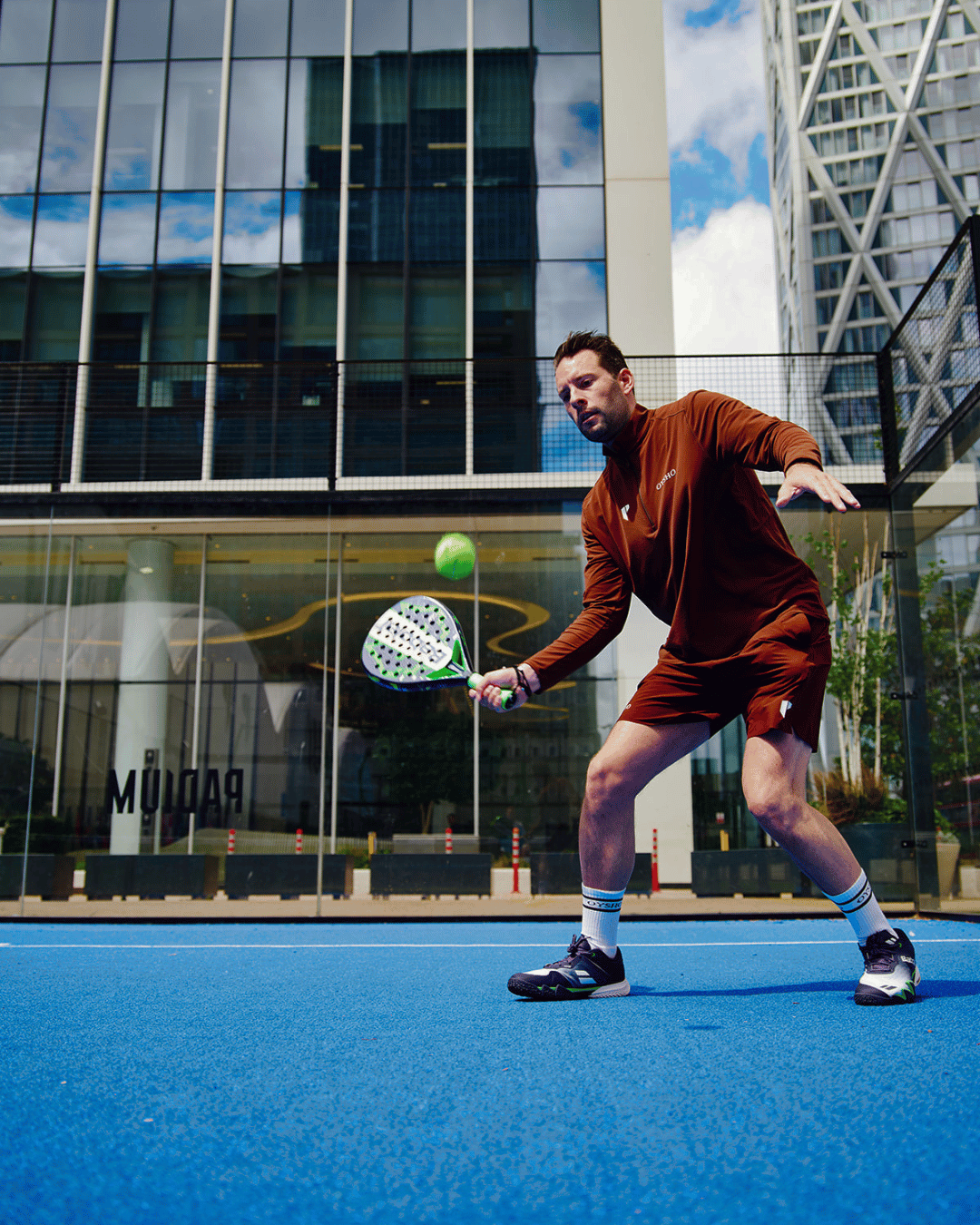
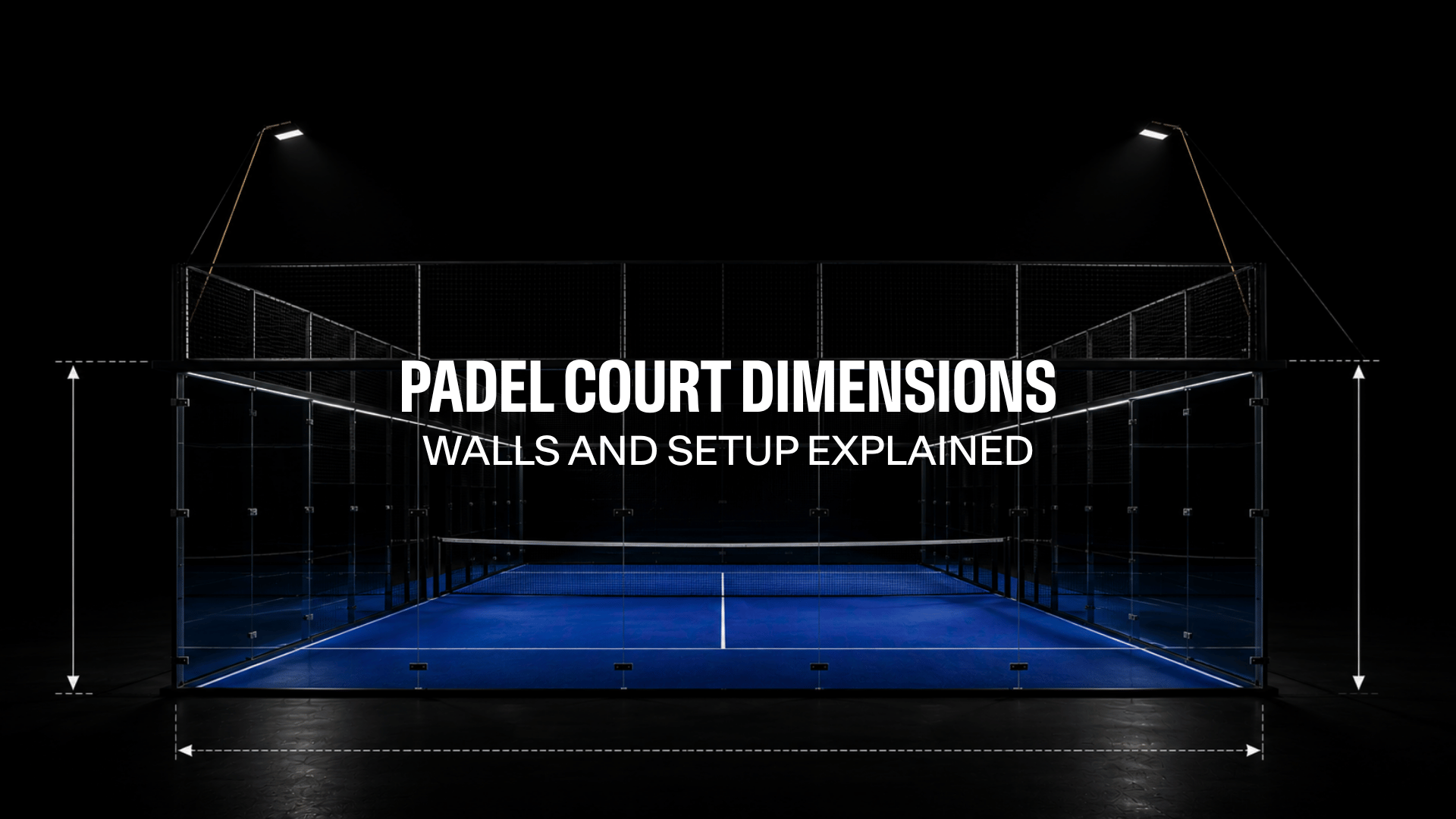
A padel court measures 20 metres by 10 metres and is completely enclosed by a structure of glass back walls and metal mesh fencing along the sides. The walls are not just decorative. They are a fundamental part of how the game is played, and understanding how to use them is one of the main skills you develop as a padel player. The surface is usually artificial grass, though indoor courts sometimes use other surfaces.
A pickleball court is considerably smaller, measuring roughly 13.4 metres by 6.1 metres, about the same size as a badminton court. There are no walls. The court is open, more like a compact version of a tennis court. The surface is usually hard court, similar to an outdoor tennis surface.
This difference in court design is not just a matter of dimensions. It fundamentally shapes the way each game feels and is played. Padel's enclosed court creates a three-dimensional game where balls can be played off the back glass and rallies continue in ways that would end the point in most other racket sports. Pickleball's open court puts all the emphasis on placement, angles and soft touch, with nowhere for the ball to go except in or out.

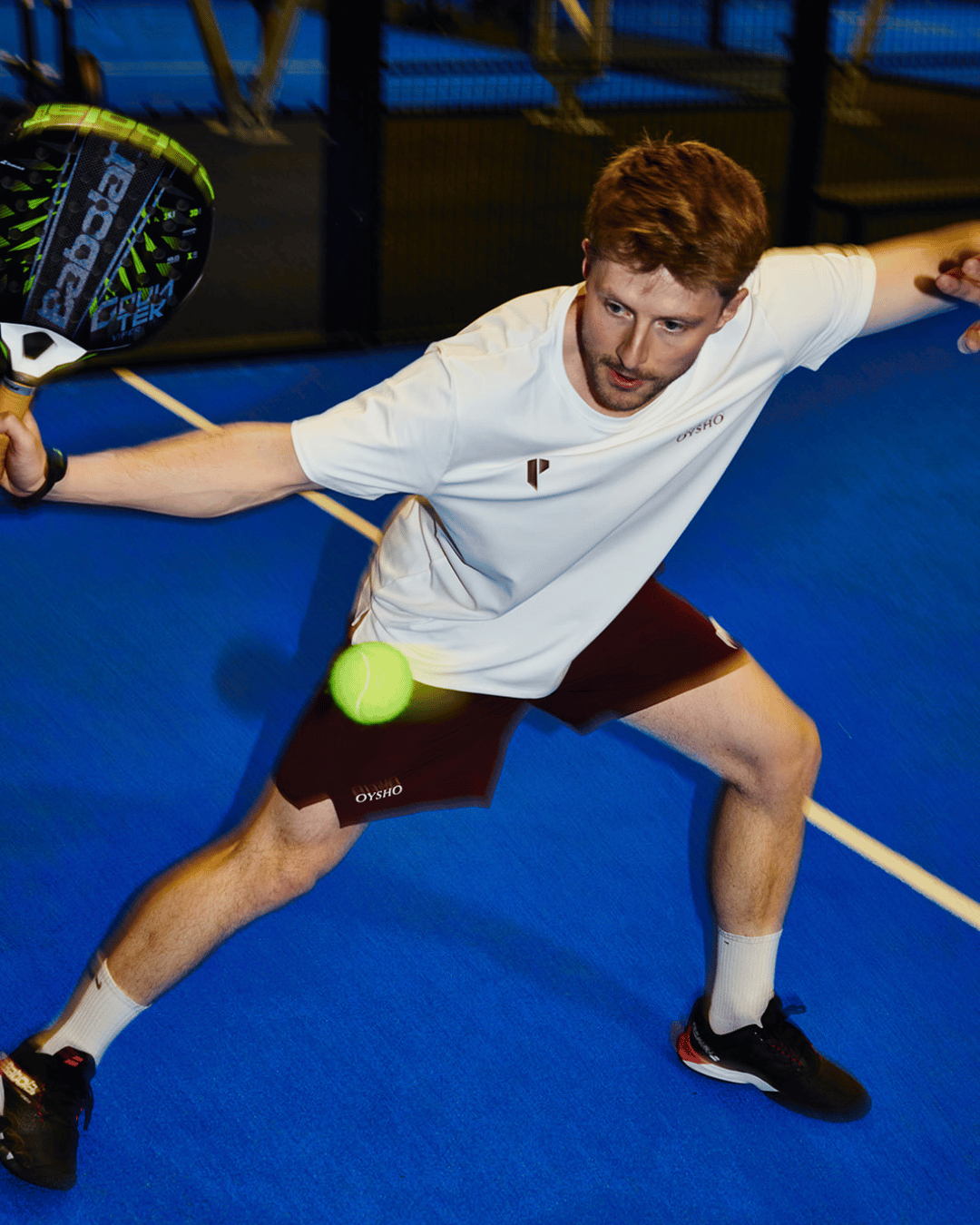
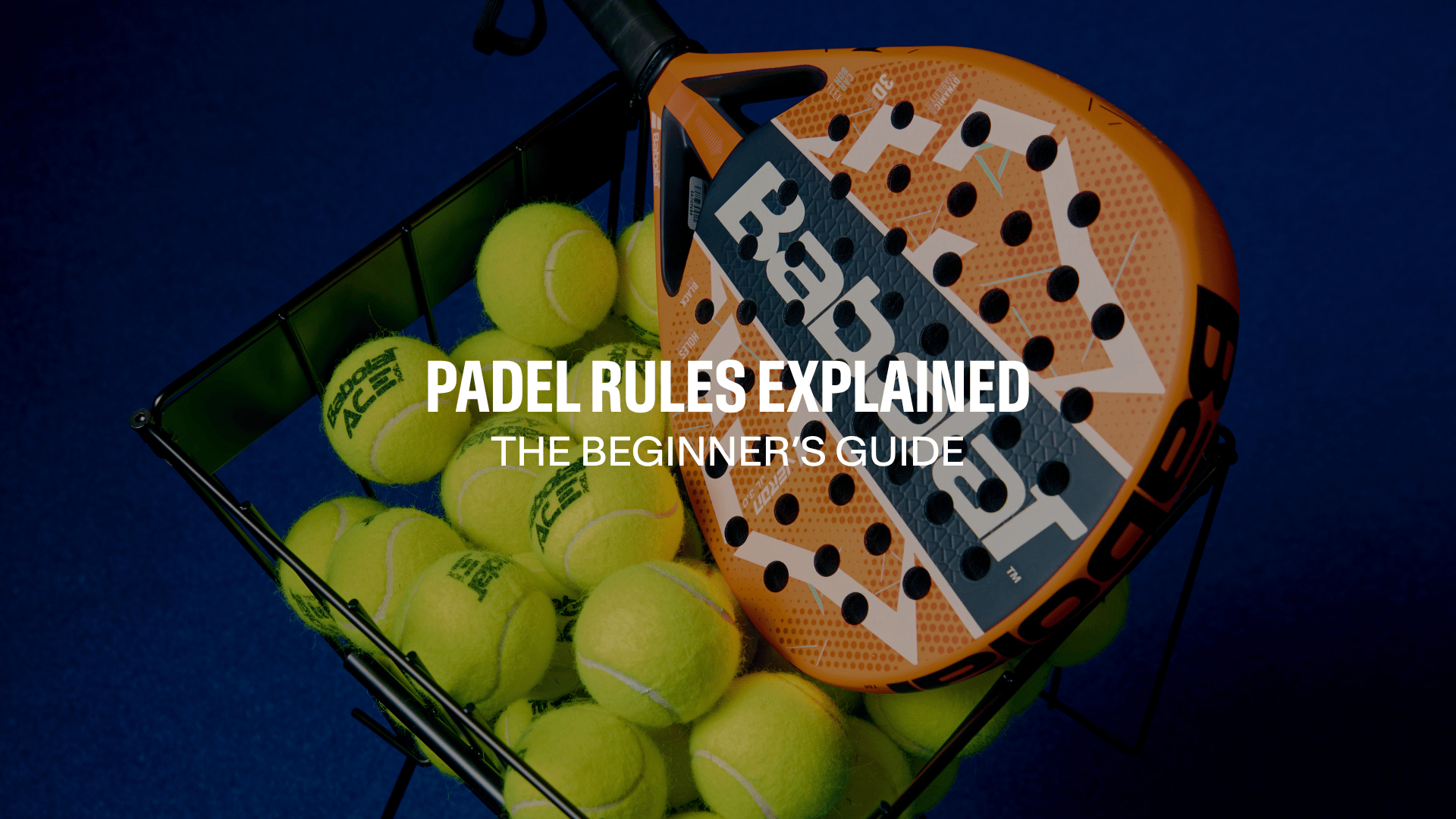
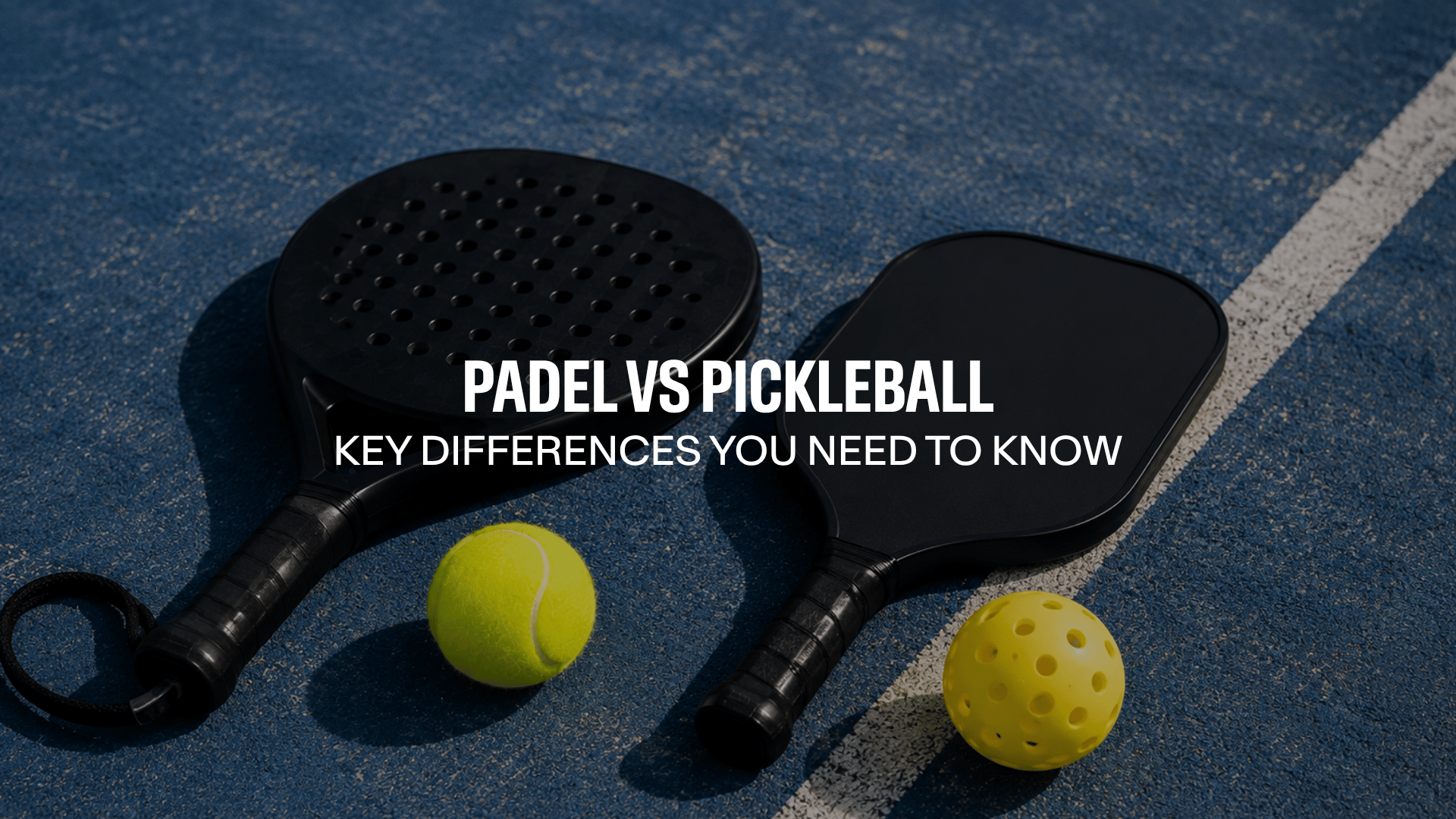
In padel, players use a solid, stringless racket, sometimes called a padel bat, made from composite materials such as carbon fibre, fibreglass, or the combination of both. The face is perforated with holes to reduce air resistance. The ball used in Padel is similar to a tennis ball but with slightly lower internal pressure, which produces a shorter, more controlled bounce.
In pickleball, players use a solid flat paddle, typically made from graphite or composite materials, and the ball is a hard plastic sphere with holes in it, similar in concept to a wiffle ball. The pickleball is lighter and produces a very different type of bounce and sound from a padel or tennis ball.
These equipment differences contribute significantly to the feel of each sport. Padel tends to produce faster, more dynamic rallies with topspin, lobs and powerful wall shots. Pickleball tends to reward touch, control and patience, with a slower ball that demands precise positioning rather than raw power.

Both sports use an underarm serve, which is one of their shared qualities and part of what makes them both accessible to beginners. However, the serving rules differ in some important ways.
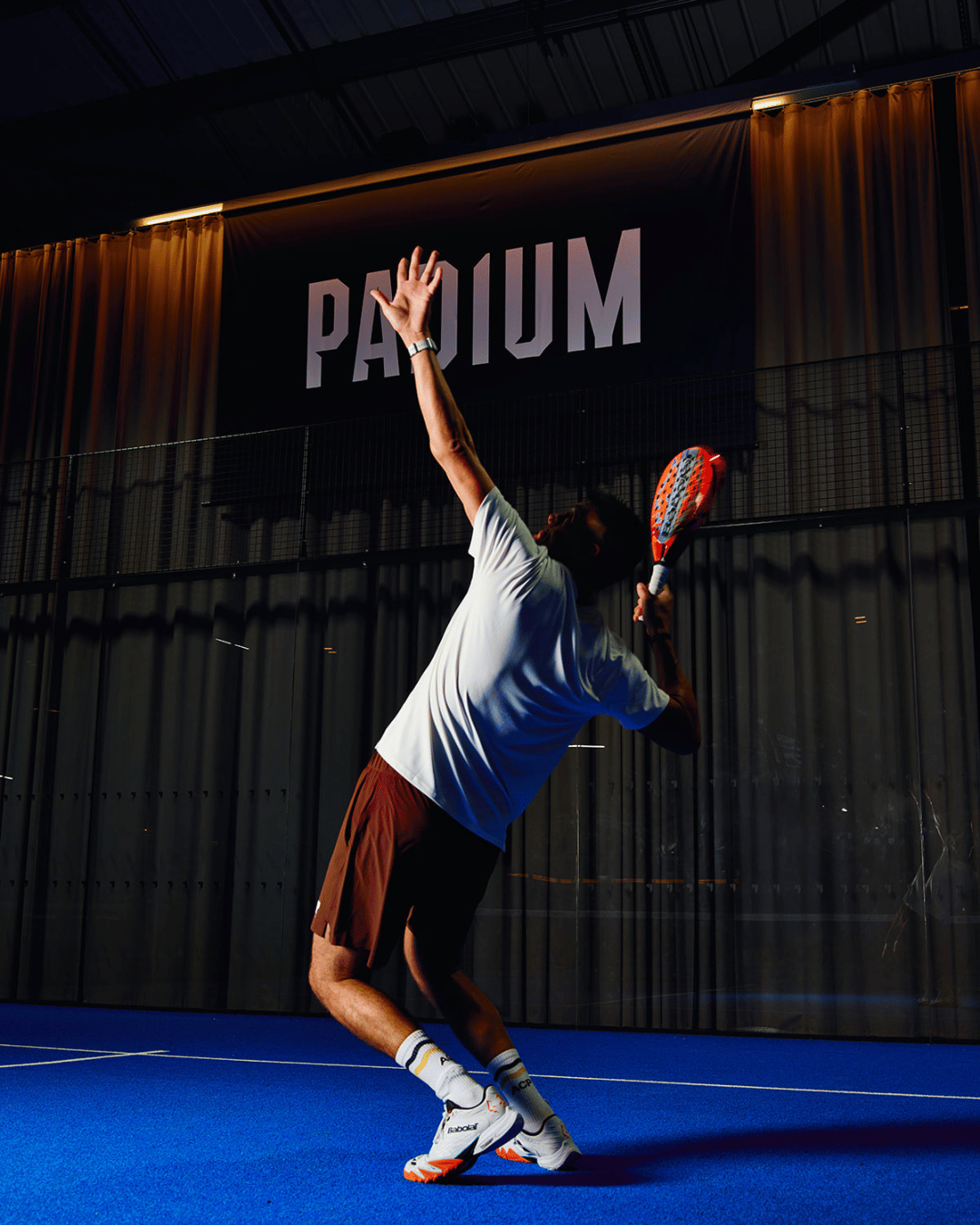
In padel, the serve must be hit underarm, with the ball bouncing on the ground before you strike it. The ball must be hit below waist height and sent diagonally into the opponent's service box. You get two attempts, just as in tennis. The serve in padel is about positioning and starting the rally cleanly, not about winning the point outright.
In pickleball, the serve is also underarm, hit diagonally across the court. One notable difference is that in pickleball there is no let rule: if a serve clips the net and still lands in the correct service box, play continues. In padel, a serve that clips the net and lands in the correct box results in a let, and the serve is replayed.
Another distinctive element of pickleball serving is the two-bounce rule. After the serve, both teams must let the ball bounce once before striking it. Only after those first two bounces have occurred can players begin volleying. This rule shapes the early stages of every point and prevents aggressive net rushes from the very first shot.

Padel uses a scoring system almost identical to tennis. Points go 0, 15, 30, 40, game. A set is won by reaching six games with a two-game lead. Matches are typically played as the best of three sets. If a set reaches six games all, a tie-break is usually played.
Pickleball scoring works quite differently. In standard recreational play, only the serving team can score points. When the receiving team wins a rally, they do not score; they simply win the serve. Games are typically played to eleven points, and you must win by two. In doubles pickleball, both players on a team get to serve before a side-out occurs, except at the very start of the game.
This means that in pickleball, a game can end quickly, or it can be drawn out through a long period where neither team can hold the serve. In padel, the tennis-style scoring creates a clear and familiar structure where every game feels like a unit within the larger match.

Beyond the technical differences, padel and pickleball feel quite distinct to play.
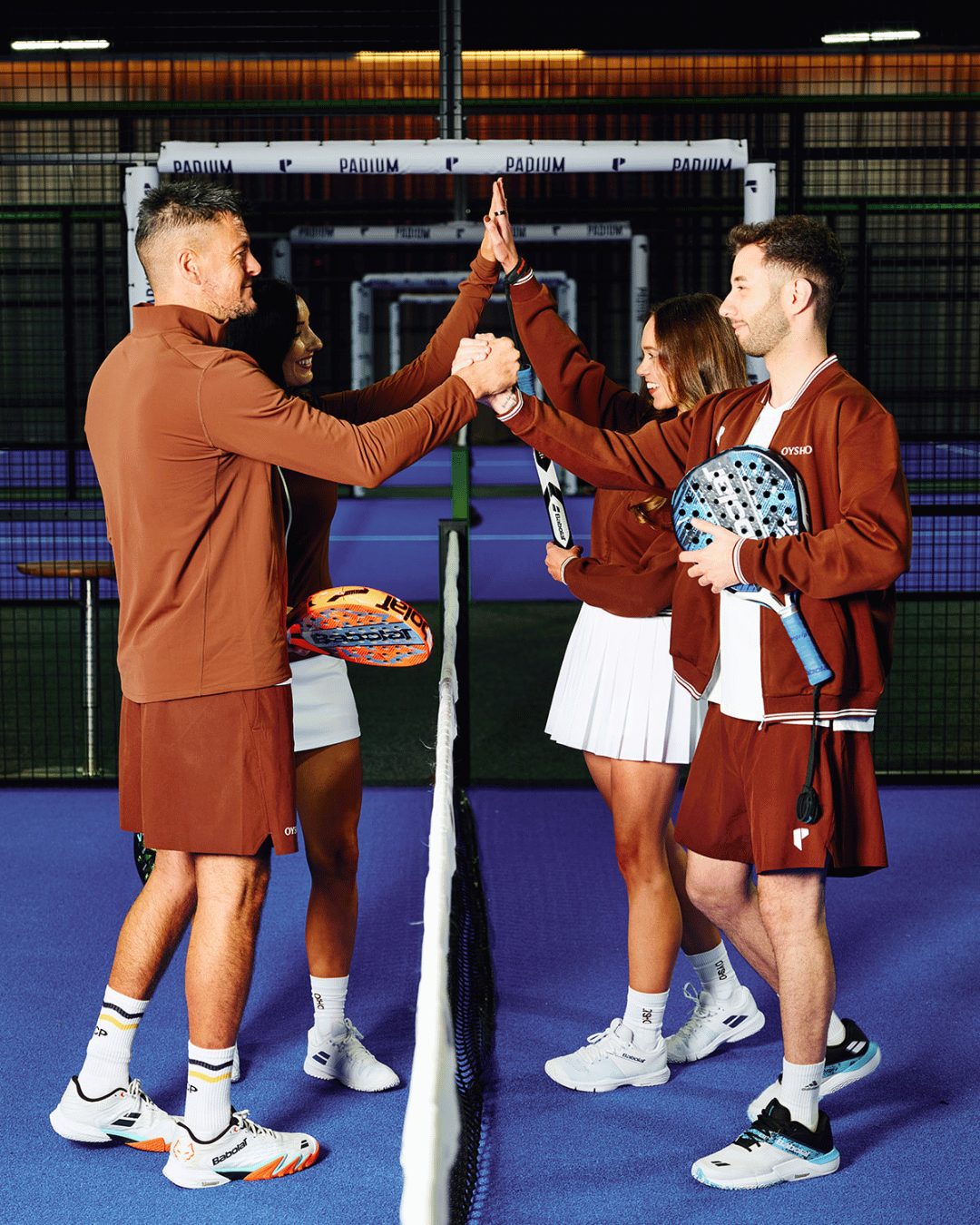
Padel rewards teamwork, communication and movement as a pair. Because it is almost always played in doubles, the social element is built directly into the format. You and your partner move together, cover the court as a unit and constantly communicate. The wall play adds a layer of creativity and anticipation that keeps rallies alive longer and creates moments that feel genuinely exciting, even at a beginner level.
Pickleball rewards patience, touch and strategic positioning. The kitchen rule encourages a particular style of play where soft shots called dinks, hit gently just over the net to land in or near the kitchen, become a central part of the game. It can be played as both singles and doubles, which gives it more flexibility than padel. It is also often cited as one of the most accessible sports for older adults, thanks to its slower pace and smaller court.
Play padel at Padium
At Padium, padel is what we do. Our clubs at Canary Wharf and Cardiff are designed for players of all levels, from complete beginners stepping onto court for the first time to more experienced players looking to sharpen their game.
If you have been curious about padel, or you play another racket sport and want to try something new, booking a court is the easiest way to find out what the game is actually like. No lengthy rules to memorise, no special experience required. Just book, show up and see what you think.
Your first game starts here. Book a court at Padium Canary Wharf or Padium Cardiff and experience padel for yourself. If you're new to the game, our Intro to Padel sessions are the perfect starting point - covering the essential rules and the fundamental shots you need to feel at home on court.
Already have some experience? Explore our Academy Classes and Social sessions, designed to sharpen your game and connect you with a community of passionate “padelheads”.