How many calories does padel burn? Explore estimated calorie ranges, key fitness benefits and why padel is a fun, social way to stay active at Padium.
Padel is fun, social and easy to get into, but it can also be a surprisingly effective workout. Because the game combines short bursts of movement, quick reactions, changes of direction and longer rallies, it can help you stay active without feeling like you are doing a traditional gym session.
So, how many calories does padel burn?
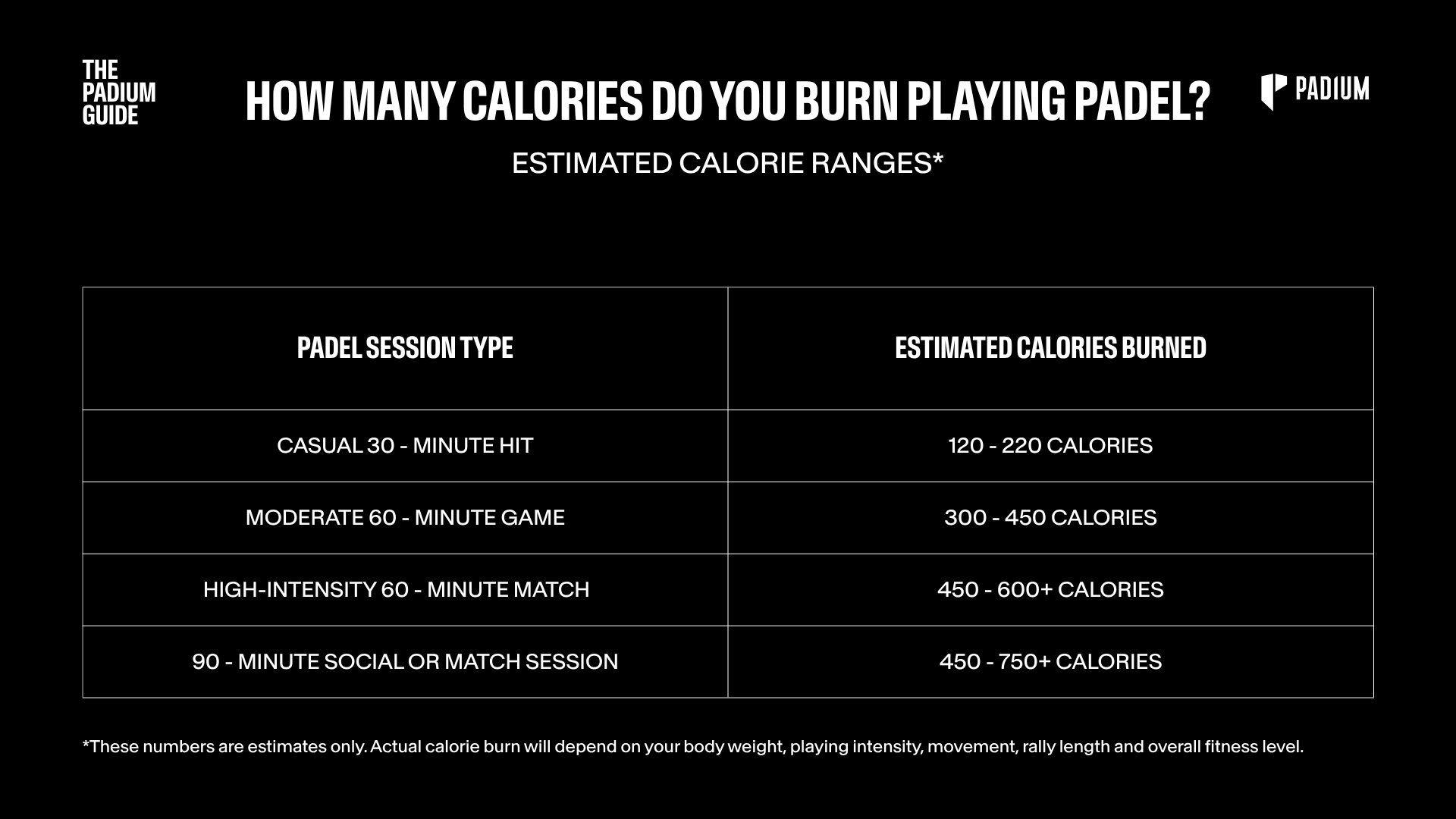
The answer depends on how long you play, how intense the match is, your body weight, your fitness level and how much you move during rallies. As a general estimate, a 60-minute padel session can burn around 250 - 600 calories, depending on the pace of play.
This makes padel a strong option for anyone looking for a workout that feels energetic, social and enjoyable. Whether you are playing casually with friends, joining a competitive match, or making padel part of your weekly fitness routine, the sport offers a great mix of movement, focus and fun.
How many calories do you burn playing padel?
The number of calories burned playing padel can vary a lot from player to player. A relaxed social game will usually burn fewer calories than a fast-paced match with long rallies, quick volleys and plenty of movement around the court.
The good news is that padel does not need to feel extremely intense to be beneficial. Even a moderate game can keep you moving, raise your heart rate and support an active lifestyle.
Why padel is a good workout
Padel is often described as beginner-friendly, but that does not mean it is easy on the body in a passive way. A game of padel includes many different types of movement, including:
- Short sprints
- Side steps
- Lunges
- Quick changes of direction
- Volleys
- Overhead shots
- Recovery movements after each rally
This means padel can support cardiovascular fitness, coordination, agility and muscular endurance. You are constantly reacting to the ball, adjusting your position and moving with your partner.
Unlike some workouts that feel repetitive, padel keeps your mind engaged. You are thinking about the next shot, reading your opponents and deciding whether to defend, lob, volley or attack. This makes the workout feel more like a game than exercise.
Key takeaway: Padel is good exercise because it combines movement, reaction speed, teamwork and endurance in one enjoyable session.
What affects how many calories padel burns?
Not every padel session burns the same number of calories. The total depends on several factors.
Playing intensity is one of the biggest. A relaxed game with shorter rallies will burn fewer calories than a competitive match with quick reactions and longer points.
Session length also matters. A 30-minute casual hit will naturally burn less than a 90-minute match or group session.
Body weight can affect calorie burn too. In general, people with a higher body weight may burn more calories doing the same activity because the body uses more energy to move.
Playing level can also make a difference. Beginners may move less at first while learning the game, but as confidence improves, rallies often become longer and more active. More experienced players may burn more calories through faster movement, better positioning and more intense exchanges.
Other factors include:
- Rally length
- How often you move to the net
- How much you defend from the back of the court
- Whether the session is casual, coached or competitive
- How much rest time there is between points
This is why the best answer to “how many calories does padel burn?” is always an estimate, not a fixed number.
Padel vs tennis, squash, running and the gym
Padel sits in an interesting space between social sport and fitness workout. It is usually less intense than squash or fast running, but often more active than a casual walk or light gym session.
Compared with tennis, padel can feel more accessible because the court is smaller and the walls help keep rallies going. Tennis may involve more running over a larger court, especially in singles, but padel keeps players moving through frequent reactions, volleys and positional changes.
Compared with squash, padel is usually less intense, but often easier for mixed ability groups to enjoy. Squash can be very demanding because of the enclosed court and continuous movement. Padel still gives you a strong workout, but with a more social and accessible feel.
Compared with running, padel is less repetitive. Instead of moving in one direction at a steady pace, you move in short bursts, change direction and react to the ball.
Compared with the gym, padel can feel more natural and motivating for people who prefer sport-based fitness. You are still moving, sweating and working your body, but the focus is on the game rather than the workout.
Key takeaway: Padel is a great fitness option for people who want exercise to feel social, engaging and fun.
The fitness benefits of padel
The benefits of padel go beyond calorie burn. While padel calories burned is a useful thing to understand, the wider fitness and wellbeing benefits are just as important.
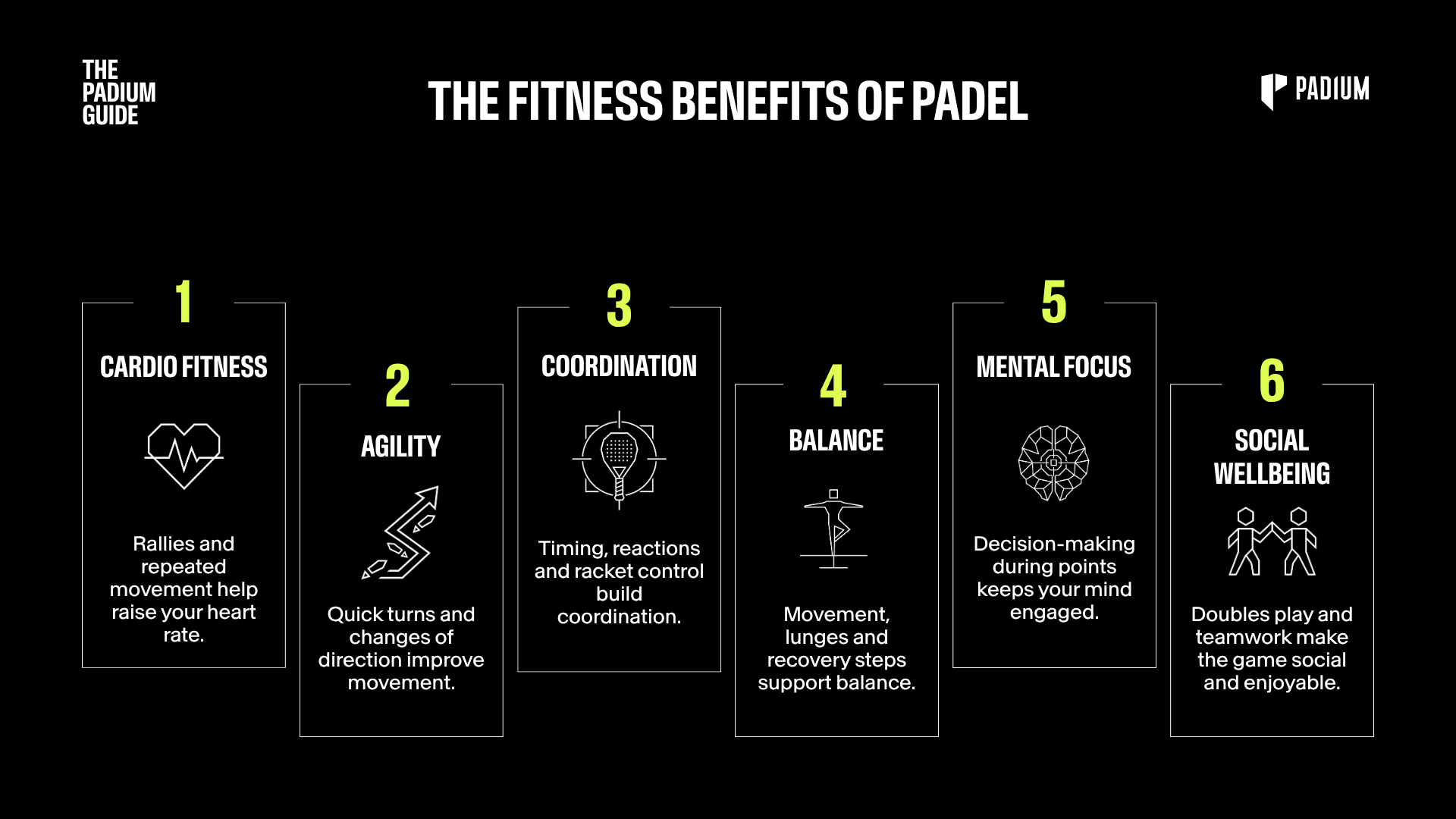
Playing padel regularly can help support:
- Cardio fitness through rallies and repeated movement
- Agility through quick turns and changes of direction
- Coordination through timing, reactions and racket control
- Balance through movement, lunges and recovery steps
- Mental focus through decision-making during points
- Social wellbeing through doubles play and teamwork
Padel is also a good option for people who want to stay active but do not enjoy traditional workouts. Because the sport is social and game-based, it can feel easier to stay motivated and return to regularly.
This makes padel a strong choice for players who want to improve fitness, enjoy movement and spend time with others at the same time.
Is padel good for an active lifestyle?
Yes, padel can be a great part of an active lifestyle. It is energetic enough to raise your heart rate, but social enough to feel enjoyable and sustainable.
For many people, the hardest part of fitness is consistency. Padel helps because it gives you a reason to keep coming back: the rallies, the competition, the improvement and the social side of the game.
It can work well as a weekly activity, a weekend match with friends, a corporate wellness session, or a regular part of your fitness routine.
At Padium, players can enjoy padel in a premium but welcoming setting, whether they are playing casually, training more regularly or joining group sessions.
Padel, wellbeing and recovery
Padel is not just about burning calories. It can also support your overall wellbeing by giving you time away from screens, work and daily routines.
A game of padel helps you focus on movement, teamwork and the moment. It can be competitive, but it can also be relaxed and social, depending on how you choose to play.
At Padium Cardiff, players can also enjoy wellness facilities including the sauna and cold plunges, making it easy to combine padel with a more complete active lifestyle experience. This can be a great addition to a session, especially for those who enjoy recovery, relaxation and wellbeing as part of their routine.
Final thoughts
So, how many calories does padel burn? For most players, a 60-minute session can burn around 250–600 calories, depending on intensity, body weight and playing style. But the real value of padel is not just in the numbers.
Padel gives you a full-body, social and engaging way to move. It supports fitness, coordination, agility and wellbeing, while still feeling fun and accessible. Whether you are new to the sport or already play regularly, it is a great way to stay active without making exercise feel like a chore.
Book a court at Padium Canary Wharf or Padium Cardiff and experience the workout for yourself.